
Forest Plantation Introduction To Aranya Ropan
Our Vision: To deliver a Greener and Healthier world to our future generation.
Our Mission: To reverse the depletion of Carbon sinks, which we do by creating Forests.



Aranya Ropan
Traversing through rounds of Industrial Revolution, Technological breakthroughs, Population explosion; much of our progress has come at a considerable cost to the environment. The pattern of skewed and unmindful claims of humanity and resultant clearing of forests to produce more food, raw material and economic development has led to reckless degradation of environment. This has an effect of catalyzing the “shrinking of carbon sinks” at a frightening rate thereby worsening the climate crisis. The climate change and its associated disastrous manifestations sees no boundaries and spares no one.
Comprehending the state of Climate Emergency, more than 140 countries have pledged, through the Glasgow Leaders’ Declaration on Forests and Land Use, to eliminate forest loss by 2030 and to support restoration and sustainable forestry. There is no time to lose, we need to act proactively in arresting the rate of environmental deterioration and rise in global temperature.
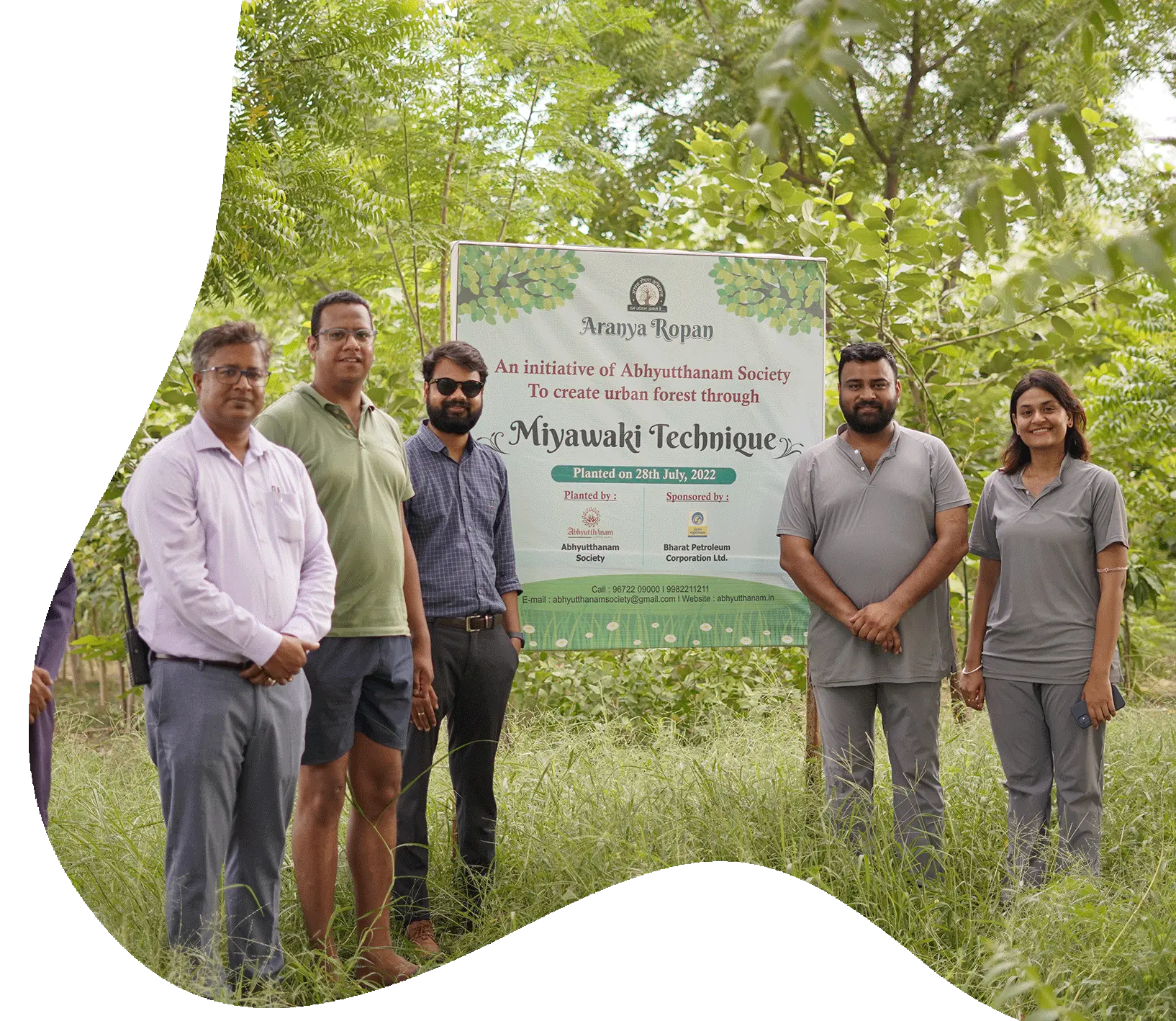
In order to recoup the loss of forest already undergone, the need for a more efficacious and swifter measures is indispensable. To this predicament, a Japanese Botanist Dr. Akira Miyawaki put forth a technique of creating denser forest at a faster rate. The Project “Aranya Ropan” is an initiative pointed towards the aim of creating a greener and cleaner world to sustainably habitat in. Under this Project, we are drifting from conventional plantation to rather creation of Mini Forest through Miyawaki Technique in which plants grow 10x faster and 30x denser.
The Urban areas draws our special attention on account of Urban Heat Island Effect. Due to replacement of Natural Forests with Concrete installations, these Urban Heat Islands have relatively higher temperatures than nearby rural areas. This effect invariably augments the need of Air Conditioners thereby increasing the energy costs, air pollution levels, and heat related illness and mortality. Therefore, Project Aranya Ropan particularly places precise focus on creation of Urban Forests.
It’s a lot easier to drink water when you have a glass. Similarly, though there is a considerable understanding on the efficacy of Forests, the Project Aranya Ropan is devised to streamline all the efforts towards Forest Creation in a dedicated and staggered manner. The Forests we create through Miyawaki Technique are 100% organic and chemical free; and consist of diverse indigenous species. We believe that understanding of Forest must not confine to just a habitat of wild species in remote areas. We endeavor to deliver tailor-made Forest in every empty space near to us which will invariably contribute in water conservation, better air quality, management of temperature and global warming and overall ecosystem.
Why We Need Forests
1. Forests: The Planet’s Carbon Sinks
Forests absorb massive amounts of carbon dioxide from the atmosphere and store it in trees, soil, and biomass — making them natural “carbon sinks.” Deforestation disrupts this balance, releasing stored carbon and significantly accelerating global warming.
2. The Only Realistic Way to Limit Global Warming
There is no credible pathway to limit global temperature rise to 2°C — let alone the ambitious 1.5°C target — without massive, large-scale afforestation and reforestation efforts worldwide.
3. The Scale of Global Forest Loss
According to UNEP, approximately 12 million hectares of forest are destroyed every year. Deforestation, along with agriculture and land-use changes, accounts for roughly 25% of global greenhouse gas emissions.
4. India’s National Forest Target
India has committed to bringing at least 33% of its geographical area under forest and tree cover as part of its climate and sustainability goals.
5. Current Forest Cover in India
As per the India State of Forest Report 2021, forest and tree cover stands at 80.9 million hectares — 24.62% of the country’s geographical area. However, only about 12% of this is natural dense forest (Global Forest Watch).
6. Forests and Tribal Livelihoods
Millions of tribal and forest-dependent communities in India rely on forests. Non-timber forest products (fruits, resins, medicines, etc.) form India’s largest unorganized economic sector, with an annual turnover exceeding 788 million USD and supporting the livelihoods of approximately 250 million people.
7. Emissions from Tree Cover Loss in India
India loses tree cover that releases an average of 0.037 gigatons of CO₂ annually — equivalent to the emissions from burning 4 billion gallons of gasoline every year (Global Forest Watch).
8. Rajasthan: A Forest-Deficient State
Rajasthan has only 4.87% of its geographical area under forest cover (ISFR 2021), with a mere 0.02% classified as Very Dense Forest — making it one of India’s most forest-deficient states.
9. Carbon Storage in Rajasthan’s Forests
Rajasthan’s forests currently hold 110.77 million tonnes of carbon stock (equivalent to 406 million tonnes of CO₂) — just 1.54% of India’s total forest carbon stock.
Relevant Legal Provisions For The Protection Of Forest
1. The Indian Forest Act, 1927:
It prohibits felling of trees without the government approval which is punishable with both fine and 3 months of imprisonment.
The fine imposed for cutting a tree without any permission by the District Forest Officer depends on the value of the tree, which depends on the tree’s age.
2. The Forest Conservation Act, 1980:
It regulates the diversion of forest lands to non-forestry purposes with an aim to strike a logical balance between developmental needs of the country and its natural assets.
It also provides for Compensatory Afforestation and wildlife habitat improvement plan.
The Supreme Court held that prior permission of Central Government is mandatory to allow any change in the use of Forest land or deemed forest land.
Therefore, the State Government or competent authority cannot permit its use for non-forest activities without the prior approval of the Central Government.
3. The Scheduled Tribes and Other Traditional Forest Dwellers (Recognition of Forest Rights) Act, 2006:
It makes a provision for ownership rights over forestland to traditional forest dwellers.
Activities under Intervention Plan
Project Aranya Ropan – Abhyutthanam Society
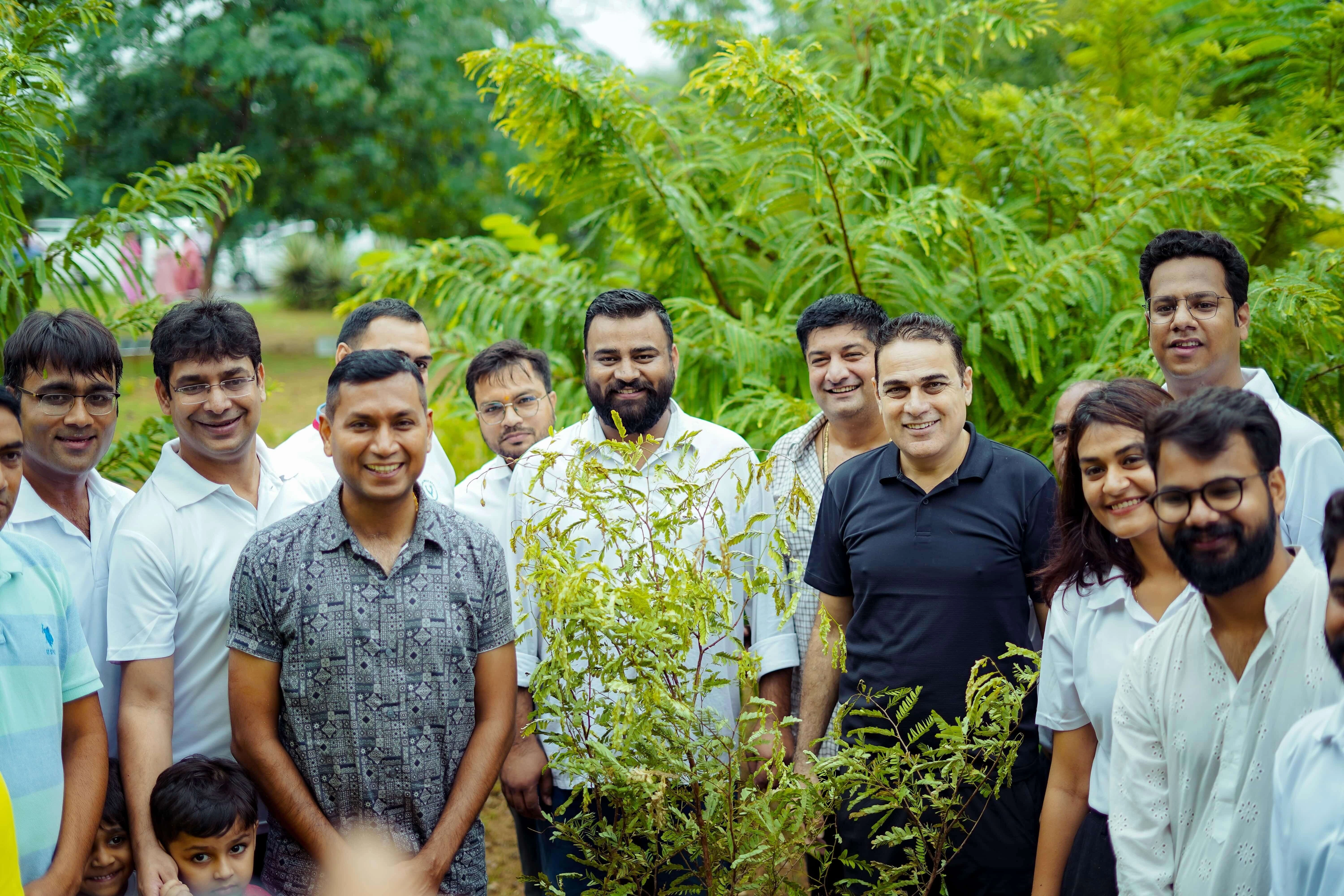
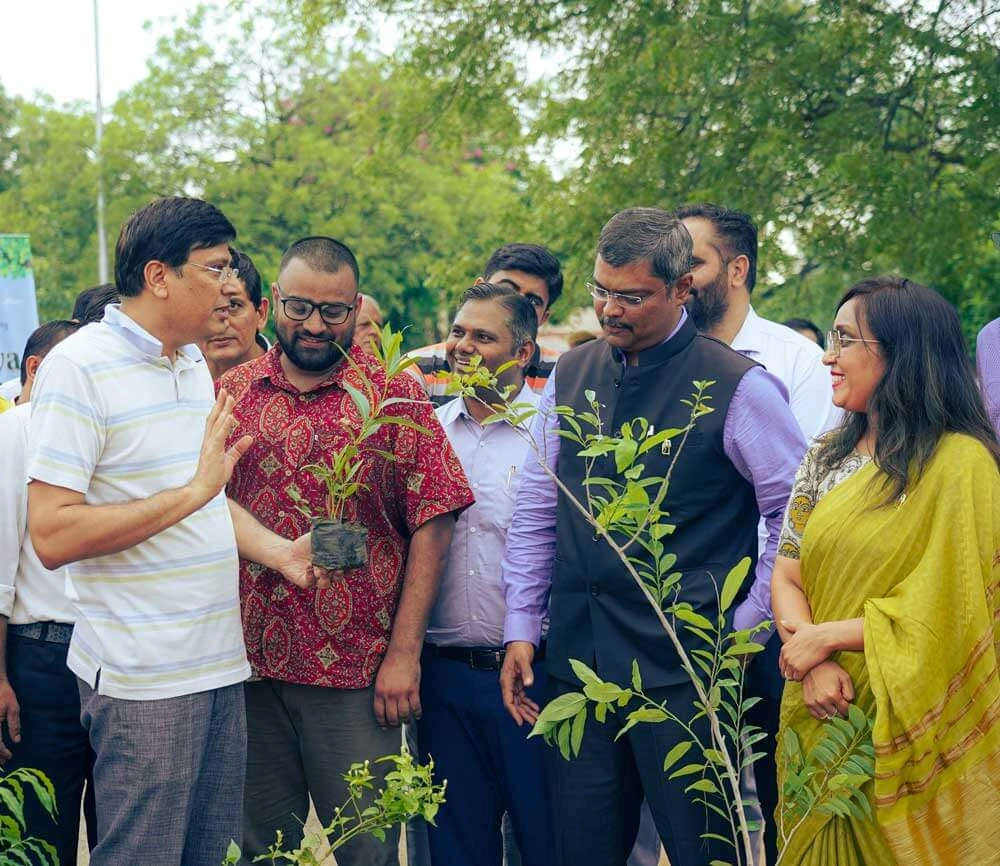
Abhyutthanam Society is committed to rapid forest creation using the scientifically proven Miyawaki Technique, climate-action awareness, and community participation. Our interventions are designed to enable individuals, institutions, and society at large to actively contribute towards building a sustainable and greener future.
-
Creation of Customized Miyawaki Forests for Businesses, Individuals & Institutions
We facilitate the creation of dense, native, multi-layered Miyawaki forests on your own land as per your specifications. These private forests not only contribute to climate mitigation but also enhance brand value, employee satisfaction, and customer trust. Maintenance and all land rights remain with you.
-
Creation of Society-Owned Miyawaki Forests through Crowdfunding & Partnerships
Abhyutthanam Society creates its own forests on schools, government-approved forest/community land, and other suitable vacant parcels using donations, sponsorships, CSR funds, and grants.
-
Tithi Ropan – Planting on Special Occasions
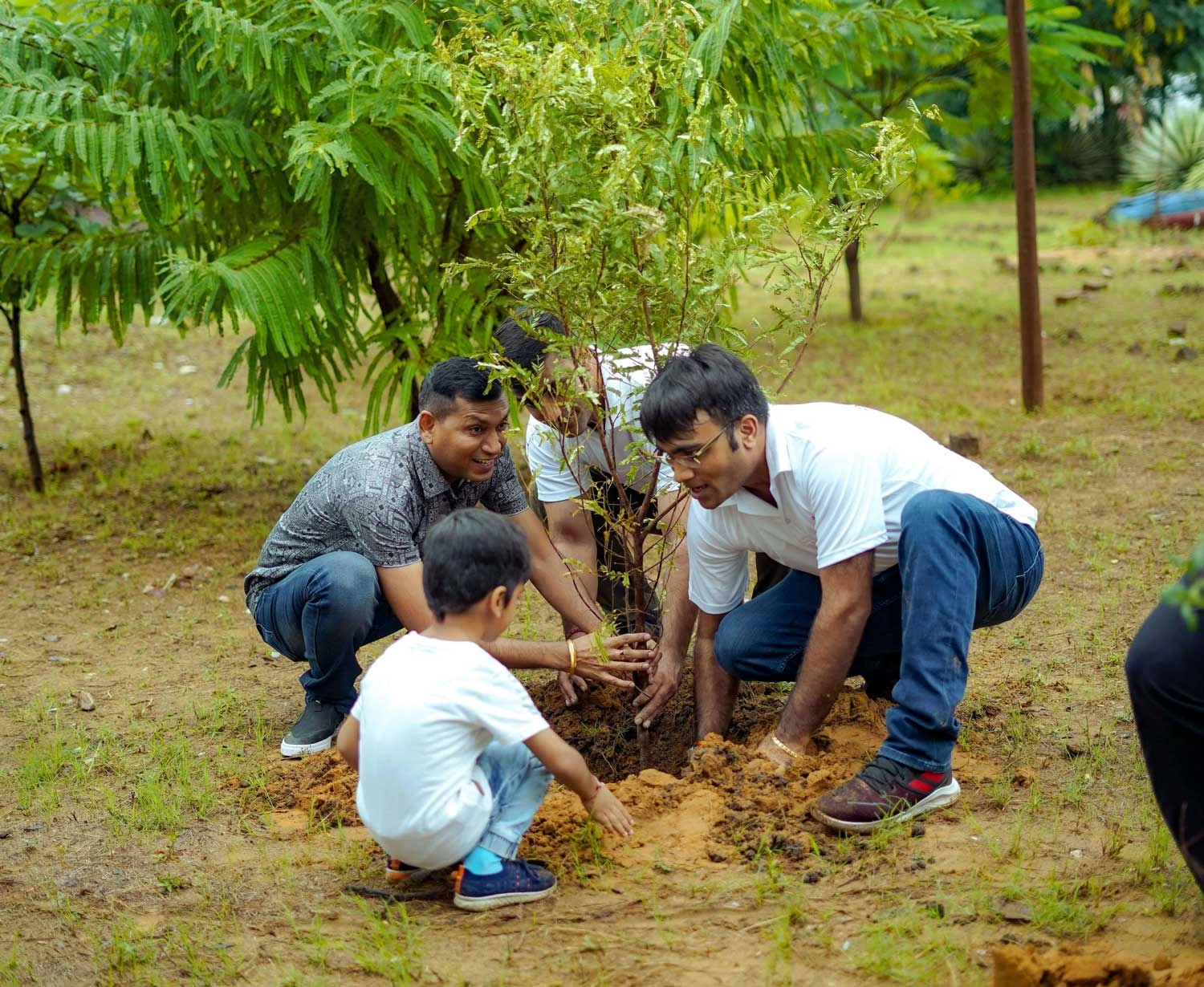
Immortalize birthdays, anniversaries, house-warmings, inaugurations, or death anniversaries by planting trees. We provide end-to-end assistance — land identification, saplings, material, labour — at reasonable cost, turning your special day into a living legacy.
-
Smriti Jungles – Memorial Forests
Honour martyrs, loved ones lost to COVID-19, natural disasters, or any departed soul by creating living memorial forests. Every breath of oxygen from these Smriti Jungles becomes a eternal tribute.
-
Seminars & Workshops on Environmental Rights & Duties
We conduct awareness programs highlighting the Fundamental Right to a Healthy Environment (Article 21) and recent judicial recognition of Nature as a “living entity” with rights to exist, thrive, and maintain natural cycles, thereby fostering a sense of duty towards Mother Earth.
-
Digital & Media Campaigns
Extensive campaigns across newspapers, posters, Facebook, Instagram, YouTube, WhatsApp, and other platforms to educate today’s youth — tomorrow’s leaders — about the Miyawaki Technique and collective responsibility towards “Nurturing Nature”.
-
Aranya Veer Campus Ambassador Programme
Recruiting and empowering college students as Campus Ambassadors to build volunteer teams, spread the message of Project Aranya Ropan, and drive on-ground forest-creation activities in exchange for attractive incentives and recognition.
Together, let us turn every patch of barren land into a thriving forest and every conscious citizen into an Aranya Veer.